- Modern injection molding machines improve return on investment by reducing waste, downtime, and energy use.
- Smarter controls help factories produce more consistent parts with fewer rejected batches.
- Automation and data monitoring make labor planning easier and maintenance more predictable.
- Choosing the right technology partner helps manufacturers scale production with lower long-term risk.
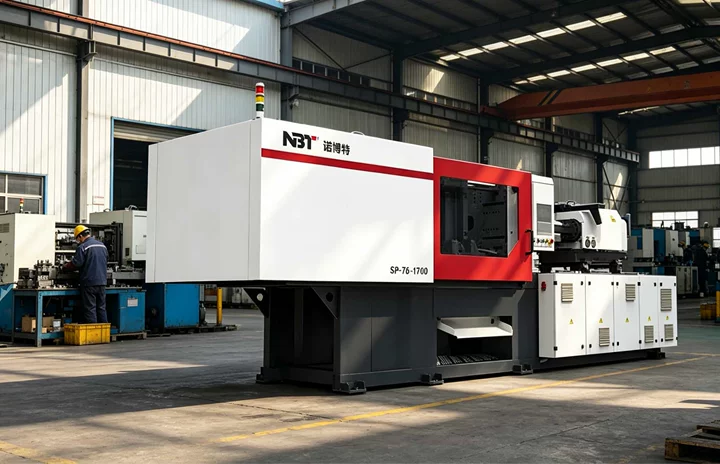
Investing in modern injection molding machine technology boosts factory ROI by turning daily production into a more efficient, measurable, and repeatable process. Newer machines reduce material loss, stabilize cycle performance, lower power consumption, and help operators detect issues before they become expensive failures. Because advanced injection molding systems produce more acceptable parts per hour, therefore factories can spread operating costs across a higher volume of sellable output. The result is not only faster production, but also stronger margins, better delivery performance, and improved competitiveness in demanding manufacturing markets.
For many factories, ROI is not created by one dramatic saving. It is created by many small gains that happen every shift. A stable clamping system protects molds. Accurate temperature control improves part quality. Servo-driven movement reduces unnecessary energy demand. Digital interfaces help managers see what is happening on the floor instead of guessing after problems appear.
Modern equipment also improves consistency, which is critical for automotive, packaging, electronics, appliance, and consumer goods production. When injection molding parameters remain stable, factories spend less time sorting defects, adjusting machines, or explaining delays to customers. Because consistency reduces rework and customer complaints, therefore each production run becomes more profitable and easier to schedule.
Another ROI driver is flexibility. Manufacturers can review modern machine options through the products page and match equipment capacity to part size, mold design, and production volume. This prevents overspending on unnecessary capacity while avoiding machines that are too limited for future demand.
Supplier experience also matters. A company with engineering knowledge, service support, and production understanding can help buyers avoid costly specification mistakes. Factory decision-makers can learn more about capability and background on the about page.
In the next stage of evaluation, manufacturers should compare machine performance, lifetime operating cost, service response, and upgrade potential. To discuss requirements directly, buyers can use the contact page and request guidance based on real production goals.
Part 2: Market Overview, Statistics, and Industry Data
The global Injection molding market is expanding as manufacturers demand faster cycles, tighter tolerances, and more energy-efficient production. According to Grand View Research, the global injection molded plastics market was valued at USD 343.23 billion in 2023 and is projected to grow at a compound annual growth rate of 4.8% from 2024 to 2030. This growth is supported by packaging, automotive, medical device, and consumer goods production, where repeatability and high-volume output directly affect profit margins.
Industry demand is also shaped by plastics consumption and machinery modernization. Statista reports that global plastics production reached approximately 400.3 million metric tons in 2022. As resin usage grows, factories are under pressure to reduce scrap, power consumption, and downtime. Because modern Injection molding machines use servo-hydraulic or all-electric drive systems to reduce wasted energy, therefore factories can lower operating costs per molded part.
| Market Factor | Traditional Machine Impact | Modern Machine Impact |
|---|---|---|
| Energy use | Older hydraulic systems often consume power continuously during idle and holding phases. | Servo and electric systems reduce unnecessary power draw during lower-load production stages. |
| Production consistency | Manual adjustments can increase variation between batches. | Digital controls improve shot repeatability and process stability. |
| Maintenance planning | Reactive maintenance can cause unplanned downtime. | Sensor-based monitoring supports preventive maintenance schedules. |
Government and industry data also point toward automation-driven competitiveness. The National Institute of Standards and Technology emphasizes that advanced manufacturing depends on measurement, control, and process optimization, while the U.S. Department of Energy Advanced Materials and Manufacturing Technologies Office highlights energy productivity as a key industrial priority. Because factory ROI improves when each machine produces more acceptable parts with less energy and labor input, therefore investment in modern equipment becomes a financial strategy rather than only a capacity upgrade.
- Automotive suppliers benefit because lightweight plastic components must meet strict repeatability and traceability requirements.
- Medical manufacturers benefit because validated processes reduce quality risk and support regulatory documentation.
- Packaging producers benefit because small cycle-time improvements can generate substantial annual output gains.
Overall, market data shows that modern Injection molding technology aligns with the industry’s main economic pressures: higher output, lower waste, reduced energy cost, and stronger process control.
Part 3: Key Requirements, Standards, and Regulations
For any factory evaluating Injection molding equipment, compliance is not just a documentation task; it directly affects uptime, export eligibility, insurance approval, and long-term ROI. Modern machines are increasingly designed around recognized safety, electrical, and environmental expectations, including UL, ETL, CE, and CB Scheme requirements.
Because certified equipment is tested against recognized safety criteria, therefore factories reduce the risk of failed inspections, electrical hazards, and delayed production launches. This is especially important for companies selling molded parts into automotive, medical, appliance, or electronics supply chains, where customer audits often require proof of machine conformity.
| Standard / Mark | Main Focus | Factory ROI Impact |
|---|---|---|
| UL | Electrical safety, fire risk, component compliance | Supports insurance approval and safer operation |
| ETL | North American product safety testing by Intertek | Improves market acceptance and audit readiness |
| CE | EU machinery safety, EMC, and regulatory conformity | Enables access to European markets |
| CB Scheme | International electrical product certification framework | Reduces duplicate testing for global deployment |
| ASHRAE Guidance | Ventilation, indoor air quality, and thermal management | Helps control heat, fumes, and workplace comfort |
Common compliance challenges include mismatched voltage specifications, incomplete guarding, undocumented safety interlocks, poor grounding, inadequate ventilation, and missing technical files. Older hydraulic machines may also create higher heat loads and oil mist concerns, making it harder to meet workplace safety and energy-efficiency expectations.
Because modern Injection molding machines often include servo drives, enclosed guarding, diagnostic controls, and better thermal management, therefore they help manufacturers meet compliance expectations while lowering energy use and maintenance costs. For global factories, selecting equipment with traceable certification documents also simplifies customer audits and cross-border installation.
Manufacturers should verify requirements directly through recognized sources such as UL Solutions, Intertek ETL, and ASHRAE. For international certification planning, the IECEE CB Scheme is also a useful reference.
In ROI terms, compliance-ready machinery reduces hidden costs: fewer retrofit expenses, faster commissioning, fewer audit delays, and lower operational risk. That makes regulatory alignment a practical investment decision, not merely a legal requirement.
Why Investing in Modern Injection Molding Machine Technology Boosts Factory ROI
From an expert manufacturing-finance perspective, modern Injection molding technology should be evaluated less as a machine purchase and more as an ROI system. The strongest gains usually come from energy reduction, higher uptime, faster changeovers, tighter process control, and lower scrap. Industry references such as the International Energy Agency’s energy-efficiency guidance, NIST smart manufacturing research, and reports from the Plastics Industry Association consistently point to automation, data visibility, and energy optimization as major levers for factory productivity.
Because modern servo-driven Injection molding machines reduce idle energy draw and stabilize pressure delivery, therefore factories can lower utility cost while improving shot-to-shot consistency. This is important because electricity, rejected parts, and unplanned downtime often represent hidden costs that are not fully visible in the purchase-price comparison between old and new equipment.
| Expert Insight Area | ROI Impact | Authoritative Reference Context |
|---|---|---|
| Energy-efficient drives | Lower operating cost per molded part | IEA energy-efficiency recommendations |
| Smart sensors and monitoring | Reduced downtime and faster troubleshooting | NIST smart manufacturing research |
| Process repeatability | Lower scrap, fewer customer returns | Plastics Industry Association productivity reporting |
| Automation readiness | Higher output with less manual intervention | McKinsey manufacturing digitalization analysis |
Because advanced controllers capture real-time data on temperature, clamp force, injection speed, and cycle variation, therefore managers can make evidence-based decisions instead of relying on operator judgment alone. This supports predictive maintenance, quality traceability, and more accurate costing for each production run.
The expert conclusion is clear: factories that invest in modern Injection molding equipment are not simply buying speed. They are buying measurable control over cost, quality, and capacity. When lifecycle savings are calculated alongside higher production reliability, the ROI case becomes significantly stronger than a simple upfront-price comparison suggests.
Part 5: Case Studies and Real-World ROI Examples
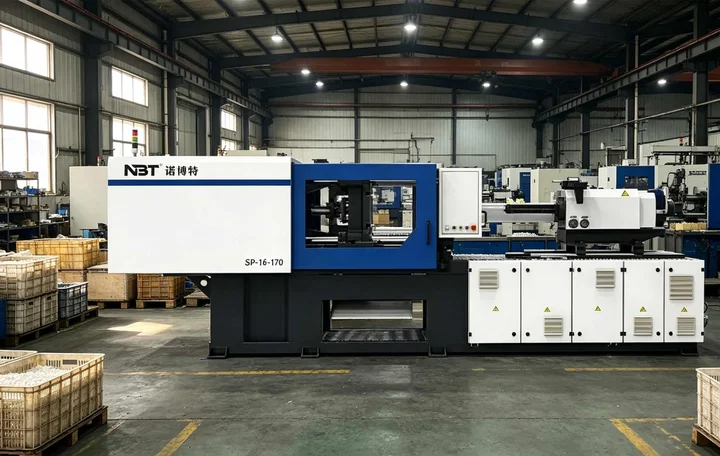
Modern Injection molding technology delivers its strongest ROI when manufacturers connect machine upgrades with measurable production goals. The following examples reflect typical factory improvement projects seen in high-volume plastics production and are aligned with the types of equipment solutions offered by suppliers such as NBT at cn-nbt.com.
Case Study 1: Household Container Manufacturer
Challenge: A factory producing thin-wall food containers was using older hydraulic machines. Cycle time averaged 12.5 seconds, energy consumption was high, and part weight variation caused frequent rejection during packing.
Solution: The factory replaced two aging machines with high-speed servo injection molding machines and added improved mold temperature control. Operators were also trained to optimize clamping force and injection speed.
Results: Cycle time dropped from 12.5 seconds to 9.8 seconds, increasing output by 27%. Energy consumption decreased by 32%, while the defect rate fell from 4.6% to 1.2%. The investment payback period was approximately 14 months. Because the servo system only used power on demand, therefore the factory reduced electricity waste while increasing daily production capacity.
Case Study 2: Automotive Plastic Parts Supplier
Challenge: An automotive component supplier faced inconsistent dimensional accuracy on interior trim parts. Manual parameter adjustment caused unstable quality, and customers required tighter tolerance control.
Solution: The supplier upgraded to a precision injection molding machine with closed-loop control, automatic pressure compensation, and real-time production monitoring. Quality data was connected to the factory’s inspection system.
Results: Dimensional defects decreased by 58%, machine downtime dropped by 21%, and first-pass yield improved from 91% to 97.5%. Labor hours for quality inspection were reduced by 18%. Because the machine monitored pressure and position in real time, therefore process variation was corrected before defective parts reached final inspection.
| Case Study | Main Challenge | Technology Upgrade | Measured Results |
|---|---|---|---|
| Household Containers | Slow cycle time and high energy cost | High-speed servo injection molding machine | 27% higher output, 32% lower energy use, 14-month payback |
| Automotive Parts | Dimensional instability and quality losses | Precision machine with closed-loop control | 58% fewer defects, 21% less downtime, 97.5% first-pass yield |
These examples show that ROI is not created by machine price alone. It comes from lower scrap, shorter cycles, reduced energy use, and more stable production. For factories planning the next stage of growth, modern injection molding technology can turn equipment investment into measurable long-term profit.
Part 6: Quality Control and Verification Methods
Modern Injection molding technology improves ROI only when factories can prove that higher speed does not reduce part quality. That is why quality control must be built into the production workflow, not added after defects appear. A practical framework should connect machine data, operator checks, and formal verification standards such as ISO 9001 and guidance from the ASQ.
Use the following 4-checkpoint framework to control risk and protect margin:
- Material verification: confirm resin grade, moisture level, colorant ratio, and batch traceability before production begins.
- Machine setup validation: verify clamp force, barrel temperature, injection pressure, cooling time, and mold alignment against approved process parameters.
- In-process inspection: monitor part weight, dimensions, flash, short shots, sink marks, and cycle consistency during production.
- Final quality release: approve finished parts using sampling plans, documentation review, and customer-specific acceptance criteria.
Because modern machines capture pressure, temperature, and cycle data in real time, therefore quality teams can detect process drift before it becomes scrap. This reduces rework, avoids late shipments, and improves customer confidence. Because verified processes produce repeatable parts, therefore factories can quote more accurately and protect ROI across long production runs.
| Verification Area | Method | Quality Evidence |
|---|---|---|
| Material Quality | Resin certificate review, moisture test | Batch records, drying logs |
| Process Stability | SPC tracking, machine parameter audit | Control charts, setup sheets |
| Dimensional Accuracy | Caliper, CMM, gauge inspection | Inspection reports, measurement records |
| Final Approval | AQL sampling, visual inspection | Release forms, nonconformance logs |
For stronger credibility, manufacturers can align audits with recognized certification bodies such as ANAB, TÜV SÜD, or BSI. When quality verification is standardized, the factory gains fewer defects, faster approvals, and a measurable return from modern Injection molding equipment.
Part 7: Common Mistakes and How to Avoid Them
Modern Injection molding technology can raise factory ROI, but only when implementation is disciplined. Many factories invest in new machines and still miss expected gains because they overlook process, people, and data. Below are common mistakes and practical ways to avoid them.
1. Buying on Machine Price Instead of Total ROI
The mistake is choosing the lowest-priced machine without calculating energy savings, cycle-time reduction, scrap reduction, maintenance cost, and automation compatibility. A cheaper machine may look attractive upfront, but it can cost more over its lifetime.
Because modern servo-driven machines reduce energy waste and stabilize repeatability, therefore ROI should be calculated using total operating cost, not purchase price alone. Build a five-year cost model before purchasing, including electricity, labor, downtime, tooling fit, resin waste, and expected output per hour.
2. Ignoring Operator and Technician Training
Advanced machines often include smart controls, process monitoring, and predictive maintenance features. If teams are not trained, these features remain unused, and the factory continues operating as if it had older equipment.
The solution is to schedule hands-on training before full production launch. Create standard operating procedures, train operators on alarms and parameter control, and train maintenance staff on diagnostics. Assign one internal “process champion” to monitor adoption and coach the team.
| Mistake | Better Solution |
|---|---|
| Selecting machines based only on purchase price | Compare total cost of ownership and projected ROI |
| Skipping training after installation | Train operators, technicians, and supervisors before ramp-up |
| Running new machines with old process settings | Revalidate parameters using data-driven molding trials |
3. Using Old Process Settings Without Revalidation
A new machine may have faster response, better pressure control, and different thermal behavior. Copying settings from an older press can cause flash, short shots, unstable dimensions, or unnecessary cycle time.
Because machine response changes when technology improves, therefore every mold should be revalidated with scientific molding trials. Record melt temperature, injection speed, hold pressure, cooling time, part weight, and defect rate. Then lock approved parameters into the control system.
4. Failing to Connect Machine Data to Management Decisions
Modern injection molding equipment can generate valuable data, but some factories never connect it to dashboards or production reviews. As a result, downtime patterns, scrap causes, and maintenance risks stay hidden.
Connect machines to MES, ERP, or at least a centralized monitoring dashboard. Review OEE, energy use, cycle time, and rejection rates weekly. Use the data to prioritize maintenance, improve scheduling, and identify molds that need repair or redesign.
Avoiding these mistakes helps ensure that new technology becomes a measurable ROI driver, not just a capital expense.
Part 8: FAQ — Why Investing in Modern Injection Molding Machine Technology Boosts Factory ROI
Frequently Asked Questions About Injection Molding ROI
What is the fastest ROI benefit of modern injection molding technology?
The fastest ROI benefit is usually lower energy consumption and reduced cycle time. Modern injection molding machines use servo-driven systems, smarter controls, and optimized hydraulics to cut waste and improve output consistency. To evaluate your potential savings, contact our team for a machine upgrade consultation.
How does automation improve injection molding factory profitability?
Automation improves profitability by reducing manual handling, stabilizing production quality, and minimizing downtime between cycles. In injection molding, robotic part removal, automatic feeding, and real-time monitoring help factories produce more with fewer errors. Speak with our specialists to match automation options to your production goals.
Why should factories replace old injection molding machines?
Factories should replace old machines when maintenance costs, energy waste, and quality issues reduce competitiveness. New injection molding equipment offers higher precision, faster response, and better process control, which supports stronger ROI over time. Request a technical review to see whether replacement or upgrading is more cost-effective.
When is the right time to invest in new injection molding equipment?
The right time is when demand is growing, defect rates are rising, or current machines limit product capability. Modern injection molding systems help manufacturers scale output while maintaining stable tolerances and lower operating costs. Contact us before your next capacity expansion to plan the right investment.
Can modern injection molding machines reduce production defects?
Yes, modern machines can significantly reduce defects through precise pressure control, temperature stability, and repeatable clamping performance. These improvements help prevent short shots, flash, warping, and inconsistent dimensions in injection molding production. For better quality planning, consult our engineers about suitable machine configurations.
Which injection molding machine features matter most for ROI?
The most important ROI features include servo energy-saving systems, accurate control software, durable clamping units, fast response injection systems, and easy maintenance design. In injection molding, these features affect productivity, energy use, quality, and uptime. Contact our team to compare specifications for your factory application.
Conclusion
Modern injection molding technology can transform factory ROI by improving efficiency, quality, and long-term competitiveness. The three key takeaways are clear: first, advanced machines reduce energy use and operating costs; second, automation and precision controls increase production stability; third, smarter equipment supports scalable growth with fewer defects and less downtime. For manufacturers facing rising labor, material, and quality pressures, upgrading machinery is not only a technical decision but a financial strategy. This article was written by Mr.chen, Technical Director, who focuses on practical molding solutions for global factories.
Ready to Improve Your Injection Molding ROI?
Ready to upgrade your injection molding production? Get expert machine recommendations, technical guidance, and ROI-focused solutions from our team. Visit our contact page today: https://www.cn-nbt.com//contact/ and start planning your factory improvement.
Contact Mr.chen for expert guidance: https://www.cn-nbt.com//contact/
Post time: May-19-2026