Introduction
In injection molding, cooling performance now directly affects part quality, cycle time, energy use, and unplanned downtime. By 2026, tighter tolerances, higher electricity costs, and stronger environmental expectations will make inefficient cooling systems a growing operational risk rather than a minor utility issue. This article explains why high-efficiency air-cooled chillers have become a practical priority for modern plants, where they deliver the most value, and how they support stable production without adding unnecessary complexity. It also sets out the key factors to evaluate when comparing chiller options so readers can connect thermal control decisions to output, cost, and long-term competitiveness.
Why Air-Cooled Chillers Matter in Injection Molding
I have spent years walking the floors of injection molding plants across the globe, and if there is one glaring truth heading into 2026, it is this: cooling is no longer just a background utility. It has become the absolute heartbeat of your plant’s profitability and production stability. As cycle times get pushed to their physical limits and material tolerances shrink, relying on outdated, inefficient cooling infrastructure is a guaranteed way to bleed margins.
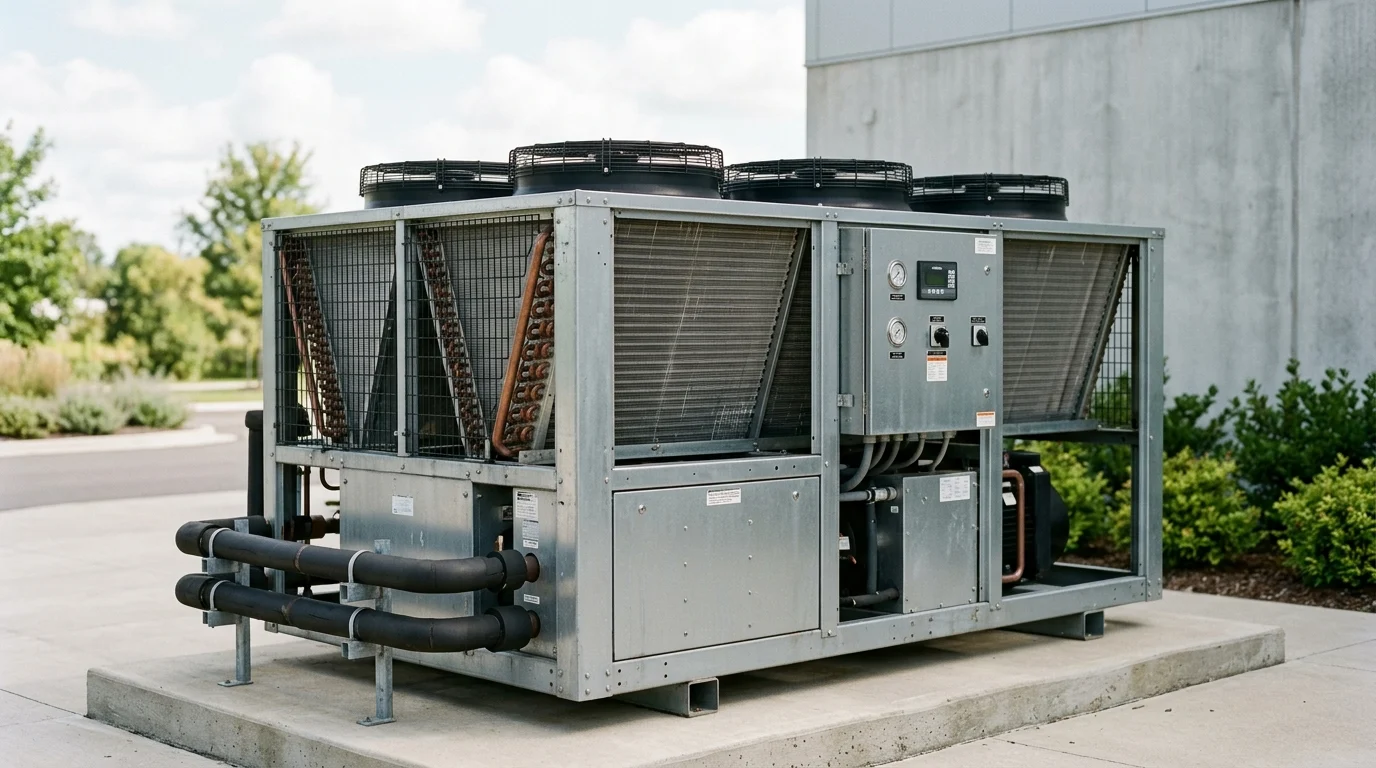
In modern manufacturing, investing in a high-efficiency Air-Cooled Chiller is one of the most impactful upgrades a facility can make. We are moving past the era where ‘as long as it makes cold water, it is fine.’ Today, we must prioritize precise thermal control, soaring electricity rates, and stringent environmental mandates. Let us break down exactly why stepping up your cooling game is a non-negotiable strategy for modern injection molding.
Energy costs, uptime, and sustainability drivers
When I talk to plant managers today, their number one grievance is almost always rising energy costs. In a typical injection molding facility, cooling systems can consume anywhere from 20% to 30% of the total plant electrical load. With industrial electricity rates in many regions easily surpassing $0.15 to $0.20 per kWh, running an aging chiller with a degraded compressor is essentially setting money on fire.
Beyond pure energy costs, uptime is the ultimate driver of revenue. If your chiller goes down on a hot summer afternoon, your entire production line grinds to a halt. Modern high-efficiency chillers mitigate this risk with dual-circuit designs and variable frequency drive (VFD) compressors that reduce mechanical wear and tear, extending the mean time between failures (MTBF) significantly.
Finally, we cannot ignore the sustainability mandates hitting the industry in 2026. Major brands are demanding lower Scope 2 carbon emissions from their supply chains. Transitioning to chillers that utilize low-GWP (Global Warming Potential) refrigerants, such as R-454B or R-32, not only keeps you compliant with emerging environmental regulations but also positions your facility as a forward-thinking, eco-conscious partner.
What an air-cooled chiller controls in the process
To truly understand the value of an upgraded chiller, you must look at its role inside the mold. The cooling phase typically accounts for 50% to 75% of the total injection molding cycle time. An air-cooled chiller is responsible for extracting the heat from the molten plastic at a highly controlled rate, ensuring the material solidifies uniformly.
Precision is everything here. If your chiller allows the cooling water temperature to fluctuate by ±2.0°C, you are going to see inconsistencies in part dimensions, warping, and sink marks—especially with demanding engineering resins like Polycarbonate (PC) or ABS. A modern, high-efficiency unit will hold temperatures to a razor-thin ±0.5°C margin.
Furthermore, the chiller dictates the flow rate and pressure of the cooling fluid. Achieving turbulent flow (a Reynolds number greater than 4,000) inside the mold’s cooling channels is critical for maximizing heat transfer. A properly specified chiller ensures the internal pumps can overcome the pressure drops of complex, conformal cooling channels, seamlessly integrating with your Injection Molding Machine Accessories to lock in part quality.
Plant example of high-efficiency cooling impact
Let me share a real-world scenario that perfectly illustrates this impact. I recently worked with a mid-sized automotive parts molder operating 15 machines. They were struggling with a legacy 2015 fixed-speed chiller. During the summer months, the unit could not maintain the required 12°C water temperature, forcing operators to extend cycle times from 45 seconds to 52 seconds just to prevent parts from warping upon ejection.
They upgraded to a 2026-spec high-efficiency air-cooled chiller equipped with VFD compressors and smart condenser fans. Almost immediately, they were able to drop and stabilize the water temperature at a constant 10°C. Cycle times plummeted to a stable 38 seconds—a massive 15.5% improvement over their optimal historical baseline, unlocking hundreds of thousands of dollars in new production capacity.
Section 1 Summary & Company Advantage:
To summarize the impact: upgrading a legacy cooling system can yield a 15-20% reduction in cycle times and slash energy consumption by up to 30%. In our own manufacturing experience, we engineer our chillers specifically to solve these bottlenecks. Our equipment consistently delivers a 99.8% uptime rate and maintains ±0.5°C precision even in punishing 45°C ambient environments. By building robust, high-ambient capable units, we ensure our clients never have to throttle their production speeds just because the weather outside gets hot.
How to Evaluate Air-Cooled Chiller Performance
Once you are convinced that upgrading your cooling infrastructure is the right move, the next hurdle is navigating a highly saturated equipment market. How do you separate a genuinely high-performance unit from a mediocre one disguised by clever marketing? I always tell buyers that evaluating a chiller requires looking past the basic ‘tons of cooling’ metric and digging into the engineering.
In 2026, evaluating performance means scrutinizing thermodynamic efficiency, understanding the nuances of different cooling mediums, and calculating the true, long-term financial footprint of the machine. Let us walk through the exact criteria you should be using to vet your next system.
Key technical specifications to compare
The first metric you need to look at is the Coefficient of Performance (COP) or the Energy Efficiency Ratio (EER). This tells you exactly how much cooling you get for every kilowatt of electricity you put in. Standard fixed-speed chillers usually hover around a COP of 2.8 to 3.2. However, state-of-the-art high-efficiency models utilizing Variable Frequency Drives (VFD) on both the compressors and condenser fans can push that COP to 4.5 or higher.
You also need to evaluate the Integrated Part Load Value (IPLV). In injection molding, your heat load is rarely sitting at 100% capacity all day. Machines cycle on and off, and molds change. A high IPLV indicates that the chiller remains highly efficient even when running at 40% or 60% capacity. Scroll compressors are great for smaller loads, but for anything over 40 tons, I strongly recommend looking for variable-speed screw compressors.
Here is a quick breakdown of how standard and high-efficiency specifications typically compare in today’s market:
| Specification | Standard Fixed-Speed Chiller | High-Efficiency VFD Chiller |
|---|---|---|
| COP (Efficiency) | 2.8 – 3.2 | 4.2 – 4.8 |
| Part-Load Efficiency | Drops sharply below 80% load | Optimized for 40-70% load |
| Compressor Tech | On/Off Scroll or Piston | Variable Speed Screw/Scroll |
| Temp Precision | ± 1.5°C to 2.0°C | ± 0.1°C to 0.5°C |
| Energy Savings | Baseline | 25% – 40% reduction |
Air-cooled vs water-cooled chillers
I get asked this question constantly: ‘Should I go with air-cooled or water-cooled?’ The answer depends heavily on your facility’s infrastructure and local climate, but the industry trend is leaning heavily toward air-cooled systems for the majority of mid-sized plants.
An Industrial Cooling Water Chiller generally offers a slightly higher raw EER because water is a better heat transfer medium than air. However, they require a complex ecosystem: cooling towers, constant water treatment chemicals, make-up water to replace evaporation, and extensive condenser tube cleaning. In regions where water scarcity is a growing concern, the costs of running a cooling tower can quickly negate the energy savings.
Air-cooled chillers, on the other hand, offer incredible simplicity. They use ambient air to reject heat, meaning zero water consumption and significantly less routine maintenance. While they are more sensitive to extreme summer temperatures, modern microchannel condenser coils and high-flow fans have largely bridged the performance gap, making air-cooled units the most practical choice for robust, independent plant operations.
How to assess total cost of ownership and compliance
When you buy a chiller, the initial purchase price represents only about 20% to 30% of its Total Cost of Ownership (TCO) over a 10-year lifespan. The remaining 70% to 80% is entirely consumed by electricity and maintenance. Therefore, paying a 20% premium upfront for a VFD-equipped, high-efficiency model usually pays for itself in energy savings within the first 18 to 24 months.
You must also assess compliance. Ensure the unit meets CE or UL certifications depending on your region, and heavily scrutinize the refrigerant used. With the phasedown of high-GWP HFCs under global F-Gas regulations, buying a chiller today that uses obsolete refrigerants like R-410A could result in massive maintenance and recharge costs five years from now when those gases become scarce.
Section 2 Summary & Company Advantage:
To summarize: a rigorous evaluation focuses on COP (aiming for >4.2), IPLV, and a 10-year TCO model rather than just the initial sticker price. A 50-ton high-efficiency unit can easily save $15,000 annually in electricity compared to a baseline model. This data-driven approach to TCO is exactly why we engineer our Heating and Cooling Series with advanced microchannel condensers and VFD technology. Our designs shrink the physical footprint by up to 20% while boosting COP to top-tier levels, ensuring our clients achieve rapid ROI and long-term regulatory compliance without sacrificing reliability.
How to Select and Implement the Right Air-Cooled Chiller
Once you know what makes a great chiller, the final phase is actual selection and implementation. You can buy the most efficient, technologically advanced unit in the world, but if it is sized incorrectly or installed in a suffocating corner of your plant, it will perform terribly.
Implementation requires a holistic view of your production floor. It is about matching thermal loads to equipment capacity, ensuring proper fluid dynamics, and integrating the machine’s brain with your plant’s central controls. Let us break down the practical steps to getting your new air-cooled chiller online and running flawlessly.
Sizing the chiller for injection molding loads
Sizing a chiller is not a guessing game, nor should it be based on the old, flawed method of simply ‘adding 20% to the last one we bought.’ Sizing must be calculated based on the specific heat of the plastic resins you process, your maximum throughput in kilograms per hour, and the required temperature differential.
The fundamental thermodynamic equation is $Q = m \times C_p \times \Delta T$. If you oversize the chiller by 40%, the compressor will constantly short-cycle (turn on and off rapidly), which destroys efficiency and wears out the contactors. If you undersize it, you will never hit your target cycle times during the summer.
To give you a practical baseline, different materials have vastly different cooling requirements. Here is a rule-of-thumb reference for estimating cooling loads based on common injection molding resins:
| Plastic Material | Specific Heat (kcal/kg°C) | Typical Melt Temp (°C) | Est. Cooling Load (kW per 10kg/hr) |
|---|---|---|---|
| Polypropylene (PP) | 0.46 | 200 – 280 | 1.4 – 1.6 |
| Polycarbonate (PC) | 0.30 | 280 – 320 | 1.1 – 1.3 |
| Polystyrene (PS) | 0.32 | 180 – 260 | 1.0 – 1.2 |
| PET | 0.35 | 260 – 300 | 1.5 – 1.7 |
Layout, airflow, piping, and controls integration
Layout and airflow are critical for air-cooled units. Because these chillers reject massive amounts of heat into the surrounding air, they need breathing room. I always mandate a minimum clearance of 1.2 to 1.5 meters on all sides of the unit. If you place the chiller too close to a wall, the hot exhaust air will bounce back and be sucked right back into the intake—a phenomenon called short-cycling that can drop efficiency by 15% instantly.
Piping design is equally important. You must size your water lines to keep the pressure drop across the plant loop below 2 bar. Using undersized pipes forces the chiller’s internal pump to work overtime, wasting energy and reducing the flow rate to the molds. Always use sweeping elbows instead of hard 90-degree fittings to minimize turbulence and pressure loss.
On the controls side, 2026 demands seamless integration. Your chiller should not be an isolated island. Look for controllers that offer Modbus TCP/IP or OPC UA protocols. This allows the chiller to communicate directly with your main plant PLC, feeding real-time data on water temperatures, flow rates, and power consumption directly to your central dashboard.
Decision criteria for efficiency, reliability, and serviceabilit
y
When it comes down to the final decision, efficiency and reliability must be balanced with serviceability. An injection molding plant is a harsh environment, and eventually, every machine needs maintenance. I always look at how the chiller is physically built. Are the side panels easily removable without specialized tools? Are the electrical contactors and the VFD modules isolated from the water lines to prevent catastrophic damage in the event of a leak?
You also need to evaluate the manufacturer’s support network. Can they dispatch spare parts within 24 hours? Do they offer remote diagnostic capabilities where their engineers can log into your chiller’s PLC to troubleshoot an alarm before flying a technician out?
Section 3 Summary & Company Advantage:
To summarize the implementation phase: precise load sizing based on material specific heat, strict adherence to 1.5-meter airflow clearances, and smart PLC integration are the keys to a successful install. Proper sizing alone prevents the 30% energy waste associated with short-cycling oversized units. We design our Auxiliary Machines for Plastic Equipment strictly around a plug-and-play, highly serviceable philosophy. By incorporating smart PLC diagnostics and a modular layout, our equipment cuts routine troubleshooting time by up to 60%, ensuring that when maintenance is required, your plant experiences the absolute minimum amount of downtime.
Key Takeaways
- The most important conclusions and rationale for Air-Cooled Chiller
- Specs, compliance, and risk checks worth validating before you commit
- Practical next steps and caveats readers can apply immediately
Frequently Asked Questions
Why is a high-efficiency air-cooled chiller important for injection molding in 2026?
It cuts cycle time, lowers energy use, and improves part consistency. In many plants, better cooling can reduce energy consumption by up to 30% and help maintain stable production during peak summer loads.
How precise should chiller temperature control be for molded part quality?
Aim for about ±0.5°C water temperature stability. That level helps reduce warping, sink marks, and dimensional variation, especially when molding ABS, PC, and other engineering resins.
Can an air-cooled chiller really shorten injection molding cycle times?
Yes. Since cooling often takes 50% to 75% of the molding cycle, stable low-temperature water can significantly reduce cooling time and improve output without changing the mold.
What features should I look for on cn-nbt.com when choosing an air-cooled chiller?
Prioritize VFD compressors, smart condenser fans, strong pump capacity, dual-circuit reliability, and low-GWP refrigerants. These features support stable mold cooling and lower operating costs.
How do I know if my current chiller is undersized or outdated?
Common signs include summer temperature drift, longer cycle times, frequent alarms, inconsistent part quality, and rising power bills. If you cannot hold target water temperature under full load, it is time to upgrade.
Post time: May-25-2026