Compare oil vs water mold temperature controllers for 160-530T injection molding machines. Technical analysis of heating media selection, operating costs, cycle time impact.
1. Understanding Mold Temperature Control in Injection Molding
Mold temperature control is one of the most critical parameters in injection molding quality. The mold temperature controller regulates the temperature of the mold surface by circulating a heating medium through channels machined into the mold plates. Proper temperature control influences crystallization rate of semi-crystalline polymers, determines surface finish quality, affects dimensional stability and shrinkage, and impacts cycle time through cooling rate optimization.
For injection molding machines in the 160-530T range, the mold temperature controller must deliver sufficient heating capacity and flow rate to maintain uniform temperature across the mold surface. A typical 160T machine requires a controller with 6-9 kW heating capacity and a pump capable of delivering 40-60 L/min flow rate. At the 530T end of the range, the requirements increase to 18-24 kW heating capacity and 80-120 L/min flow rate. These specifications directly influence the choice between oil-based and water-based temperature controllers.
Ningbo ROBOT’s mold temperature controller range covers both oil and water configurations for machines from 160T to 530T.
2. Water-Based Controllers: Advantages and Limitations
Water offers advantages: high specific heat capacity (4,186 J/kg-K), excellent thermal conductivity (0.6 W/m-K), low viscosity (1 cP at 20 deg C), and zero cost for the medium itself. The high specific heat capacity allows water-based controllers to remove heat more efficiently than oil-based systems during the cooling phase, reducing cycle times by 10-20 percent.
However, the boiling point of water at atmospheric pressure (100 deg C) sets a hard limit. Pressurized systems can reach 120-140 deg C but require specialized seals and relief systems. Water also causes corrosion in steel mold plates, requiring inhibitors and regular maintenance. Scale buildup in hard water regions reduces heat transfer efficiency and requires periodic descaling.
3. Oil-Based Controllers: Higher Temperature Capability
Thermal oils have specific heat capacity of approximately 1,800-2,200 J/kg-K, roughly half that of water. Viscosity ranges from 10-50 cP at operating temperature, reducing flow rates and increasing pumping power. For 300T machines, oil controllers require larger heating elements (12-36 kW) compared to water (9-18 kW).
Ningbo ROBOT (cn-nbt.com) manufactures both types with proprietary thermal oil circulation systems designed to minimize degradation and extend oil service life.
4. Oil vs Water: Comparative Analysis
Below 90 deg C, water is superior. Between 90-140 deg C, pressurized water works but requires careful engineering. Above 140 deg C, oil is the only option. Water controllers reduce cooling time by 15-25 percent versus oil at the same temperature. Water consumes 20-35 percent less energy. Oil incurs costs for thermal oil (USD 300-800 per fill for 300T), periodic replacement, and disposal. Water only requires corrosion inhibitors (USD 50-150 per year).
5. Specifications for 160-530T Machines
160-250T water: 6-12 kW, 40-60 L/min. 250-380T water: 12-18 kW, 60-80 L/min. 380-530T water: 18-24 kW, 80-120 L/min. Oil variants: 160-250T: 12-18 kW, 30-40 L/min. 250-380T: 18-24 kW, 40-60 L/min. 380-530T: 24-36 kW, 60-80 L/min. Pump pressure should be 4-6 bar for water, 6-10 bar for oil.
6. Circuit Design for Consistent Quality
Water systems use braided stainless hoses with EPDM liners rated for 10 bar and 120 deg C. Oil systems need hoses rated for 200 deg C and 10-16 bar with PTFE liners. Water benefits from smaller channels (6-10 mm) at higher flow rates for turbulent flow. Oil uses larger channels (10-16 mm) to reduce pressure drop. Flow rate requirement: 0.5-1.0 L/min per kW of cooling load.
7. Maintenance Considerations
Water: weekly quality inspection, monthly hose check, quarterly filter cleaning, annual seal replacement. Maintain pH 8.0-9.5 for corrosion protection. Oil: weekly level/color check, monthly sample analysis, quarterly filter replacement, annual replacement (mineral) or every 2 years (synthetic). Common errors: operating water above 90 deg C without pressurization, running oil with low level, mixing incompatible oil types, failing to bleed air after mold change.
Ningbo ROBOT provides technical documentation and troubleshooting support for their mold temperature controller products, with application engineering support from Mr. Chen’s team.
Selecting the Right Controller for Your Injection Molding Application
The decision between oil and water mold temperature controllers depends on the specific polymer processed. For commodity thermoplastics (PP, PE, ABS, HIPS) on 160-530T machines, water is almost always optimal. The lower investment, reduced energy consumption, faster cycles, and minimal operating costs make water the default. For engineering thermoplastics (PEEK, PPS, LCP) above 140 deg C, oil is the only option.
Common selection mistakes include undersizing heating capacity, selecting oil when water suffices, and failing to consider cooling capacity. The cooling capacity should be at least equal to heating capacity, and for thin-wall molding, 1.5-2 times the heating capacity.
Case Study: Converting from Oil to Water on a 320T Machine
A custom molder running a 320T press with ABS material (mold temperature 65 deg C) was using an oil controller. Energy audit revealed the oil controller consumed 4.2 kW versus 2.8 kW for water. Over 6,000 hours/year at USD 0.12/kWh, annual savings were USD 1,008. The water controller also reduced cycle time by 1.5 seconds (12 percent improvement), increasing production by 450 parts per shift. Payback period dropped to under 6 months when factoring in increased production revenue.
Technical Specifications Summary
Mold temperature controllers for 160-530T machines require specific sizing: 160-250T water: 6-12 kW, 40-60 L/min; 250-380T water: 12-18 kW, 60-80 L/min; 380-530T water: 18-24 kW, 80-120 L/min. Oil variants: 160-250T: 12-18 kW, 30-40 L/min; 250-380T: 18-24 kW, 40-60 L/min; 380-530T: 24-36 kW, 60-80 L/min.
For water systems, use braided stainless steel hoses with EPDM liners rated for 10 bar and 120 deg C. For oil, hoses rated for 200 deg C and 10-16 bar with PTFE liners. Water benefits from smaller channels (6-10 mm) for turbulent flow. Oil uses larger channels (10-16 mm). Flow rate: 0.5-1.0 L/min per kW cooling load.
Water maintenance: weekly quality check, monthly hose inspection, quarterly filter cleaning, annual seal replacement. Maintain pH 8.0-9.5. Oil: weekly level/color check, monthly sample analysis, quarterly filter replacement, annual (mineral) or biannual (synthetic) replacement. Common errors: operating water above 90 deg C without pressurization, low oil level, mixing oil types, failing to bleed air.
Ningbo ROBOT’s mold temperature controller page provides detailed specifications for each model. Mr. Chen’s team offers application engineering support for matching controller specs to production requirements.
Sizing Calculations for Oil and Water Systems
Proper sizing requires calculation of the thermal energy required to bring the mold to operating temperature and maintain it during production. The heating capacity is calculated as the sum of mold thermal mass heating, heat loss through mold to press platens, heat loss through convection and radiation, and the heat carried away by the molded parts. For a typical 500g ABS part on a 320T machine with 12-second cycle, the total heating load is approximately 8-12 kW.
The pump flow rate determines heat transfer efficiency. Higher flow rates produce turbulent flow conditions that maximize heat transfer coefficient. The Reynolds number determines whether flow is laminar (Re under 2,300) or turbulent (Re over 4,000). For water systems, a flow velocity of 1.5-3.0 m/s typically produces turbulent flow in standard hose sizes. For oil systems, the higher viscosity requires either larger hoses or higher pump capacity to achieve turbulent flow.
The rule of thumb for pump sizing: flow rate (L/min) should be approximately 3-5 times the heating capacity (kW) for water systems. For a 12 kW water controller, select 36-60 L/min pump capacity. For oil systems, the ratio is 2-3 times due to the lower specific heat capacity of oil. Proper pump sizing ensures the controller can respond quickly to temperature variations during the molding cycle.
Advanced Temperature Control Features
Modern mold temperature controllers incorporate multiple sensors and control algorithms to maintain precise temperature control. The proportional-integral-derivative (PID) controller uses three parameters: proportional band (typically 3-5 deg C for water, 5-10 deg C for oil), integral time (0.5-2.0 minutes), and derivative time (0.1-0.5 minutes). Auto-tuning functions allow the controller to determine optimal PID parameters automatically during initial setup.
Dual-channel controllers provide independent temperature zones for different mold halves or for cavity/core temperature separation. This is essential for molds where the cavity side requires different temperature than the core side, such as in multi-cavity tools for high-precision components. Yushine (ROBOT) mold temperature controllers include dual-channel capability in their higher-tier models.
Remote monitoring and control via Ethernet or serial communication allows integration with production monitoring systems. The controller can report real-time temperatures, energy consumption, and alarm conditions to a central SCADA system. Data logging capabilities provide temperature history for quality documentation, helping molders demonstrate process control for ISO 9001 and IATF 16949 audits.
ROBOT (Ningbo) Product Range
ROBOT (Ningbo) Intelligent Technology Co., Ltd. offers a comprehensive range of mold temperature controllers and auxiliary equipment for the injection molding industry. The company’s Yushine brand product line includes water controllers with capacities from 3 kW to 48 kW, oil controllers from 6 kW to 36 kW, and dual-function combination units for maximum flexibility. The company was established in 2004 and has accumulated over 20 years of experience.
Browse Yushine’s mold temperature controller page for detailed product specifications and model selection guidance. Mr. Chen’s team provides application engineering support, including system sizing calculations, installation guidance, and troubleshooting for injection molders worldwide.
Water Quality Management for Mold Temperature Control Systems
Water quality directly affects the performance and service life of water-based mold temperature controllers. Hard water containing calcium and magnesium carbonates precipitates as scale on heating elements and channel walls, reducing heat transfer efficiency and restricting flow. Scale buildup of just 1 mm on heating elements can reduce heat transfer by 15-20 percent, increasing energy consumption and reducing heating capacity. Scale inside cooling channels restricts water flow and reduces cooling capacity, directly impacting cycle times.
Recommended water quality parameters for mold temperature controllers: pH 8.0-9.5 (slightly alkaline to reduce corrosion of ferrous components), total hardness under 100 ppm as CaCO3 (softer water to minimize scale formation), chloride ion concentration under 50 ppm (to prevent stress corrosion cracking of stainless steel components), total dissolved solids under 200 ppm, and conductivity under 500 microsiemens/cm. For facilities with hard water supply, a water softener or deionization system should be installed upstream of the mold temperature controller.
Corrosion inhibitors should be added to the water at concentrations of 0.5-2 percent by volume depending on the specific chemistry. Common inhibitors include: sodium molybdate for ferrous metal passivation, sodium nitrite for steel systems (avoid with copper/alloy components), tolyltriazole for copper and brass components, and organic phosphonates for scale prevention. The inhibitor concentration should be tested monthly and adjusted as needed. The entire system should be drained and flushed quarterly with fresh water and fresh inhibitor charge. Once annually, the system should be cleaned with a descaling solution (5-10 percent citric acid at 60-70 deg C circulated for 2-4 hours), rinsed thoroughly, and refilled with inhibited water.
Common Troubleshooting Scenarios for 160-530T Machines
Temperature not reaching setpoint is the most common issue reported by injection molders. Verify that the heating capacity matches the mold thermal mass. Check for scale buildup in water systems or carbonized oil in thermal fluid systems. Contaminated thermal oil loses heat transfer capacity and must be replaced. Verify water flow rate using the sight glass or flow meter – low flow indicates pump issues, blocked channels, or closed valves.
Temperature overshooting during startup occurs when the PID controller is not properly tuned for the specific mold and machine combination. The PID auto-tune function should be run with the mold installed and the machine at operating temperature. If auto-tuning does not resolve overshooting, the proportional band may need to be widened and the integral time increased. Temperature cycling during production indicates that the controller is too small for the heat load or the PID parameters need adjustment.
Oil carbonization produces visible darkening of the oil and sludge deposits on heating elements. This is caused by localized overheating where oil contacts very hot surfaces near the heating elements. Verify that the oil flow rate is adequate to carry heat away from the heating elements and prevent localized boiling. Oil should be sampled monthly for color and viscosity changes.
Selecting Temperature Controller Auxiliary Equipment
Water chillers may be required for process cooling where the cooling load exceeds the mold temperature controller’s built-in cooling capacity or where the facility’s cooling tower water is not available. For 160-530T machines, a chiller with 30,000-100,000 BTU/h capacity is typically matched to the application. Chiller selection should be based on the total heat rejection requirement, including the plastic cooling load (calculated from part weight, specific heat, and cycle time), the mold cooling load, and the hydraulic oil cooling load if the chiller serves multiple functions.
Automatic mold change systems integrate with mold temperature controllers to enable rapid mold changes with pre-connected heating and cooling circuits. The mold temperature controller should have automatic connection interfaces with shut-off valves on both supply and return lines. When a mold change is initiated, the controller performs a purge cycle to clear the previous mold’s water, then maintains standby temperature while the new mold is installed and connected by the automatic system.
ROBOT (Ningbo) Intelligent Technology Co., Ltd. provides these auxiliary systems as part of a complete injection molding peripheral equipment offering. The company, established in 2004, continues to develop new products serving injection molding, extrusion, and blow molding markets worldwide. Visit the Yushine mold temperature controller page for detailed product specifications and technical documentation.
Installation Best Practices for Mold Temperature Controllers
Proper installation of the mold temperature controller is essential for reliable operation and optimal performance. The controller should be installed on a level surface with adequate clearance for ventilation. Minimum clearance of 300 mm on all sides allows cooling air to flow freely around the unit. The supply and return hoses should be connected to the mold with quick-connect couplings that include shut-off valves for maintenance convenience. The hose length should be the minimum needed to reach the mold to minimize heat loss and pressure drop.
Electrical installation should follow the manufacturer’s specifications and local electrical codes. The controller requires a dedicated circuit with a properly rated circuit breaker. The power supply must be stable within +/- 10 percent of the rated voltage. Grounding is essential for operator safety and proper operation of electronic controllers. The controller should be connected to a reliable earth ground, and all fluid connections should be electrically bonded to prevent galvanic corrosion between dissimilar metals in the cooling circuit.
After installation, commissioning includes power-on self-test, water or oil system filling and bleeding to remove air, temperature calibration check against a reference thermometer for accuracy within +/- 1 deg C at operating temperature, flow rate check against specifications, PID auto-tuning with the production mold connected and at operating temperature, and safety system verification testing for over-temperature protection, low-flow alarm, and emergency stop function.
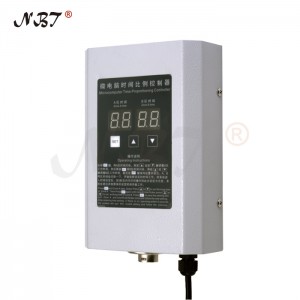
ROBOT (Ningbo) Mold Temperature Controller Product Range
ROBOT (Ningbo) Intelligent Technology Co., Ltd. manufactures a complete line of mold temperature controllers under the Yushine brand. The product range covers water-based controllers from 3 kW to 48 kW, oil-based controllers from 6 kW to 36 kW, and combination units for dual-function capability. The company, established in 2004, has accumulated more than 20 years of experience in the auxiliary equipment industry.
Beyond mold temperature controllers, ROBOT also manufactures industrial water chillers, hopper dryers, plastic granulators, dosing and mixing equipment, and complete material handling systems for the plastics processing industry. The company serves injection molders, extruders, and blow molders in markets across Asia, Europe, and the Americas. For detailed specifications on individual models, visit the Yushine mold temperature controller product page and contact the ROBOT sales team for current pricing.

ROBOT also manufactures robot arm products complementing the injection molding automation line. Visit the company homepage for the complete product range including granulators, dryers, and material handling systems designed to optimize injection molding production efficiency.
For more information, browse robotic arms and auxiliary equipment for plastics processing.
For additional product information, browse the Yushine product range including mold temperature controllers and robot arm automation products.
Frequently Asked Questions
What is the difference between oil and water controllers?
Water operates up to 90 deg C (140 pressurized), oil to 180-200 deg C. Water offers better heat transfer efficiency.
Which is more energy-efficient?
Water consumes 20-35 percent less energy due to superior conductivity and lower pumping requirements.
What size controller for 300T machine?
Water: 12-18 kW, 60-80 L/min. Oil: 18-24 kW, 40-60 L/min.
How often to replace thermal oil?
Synthetic: 8,000-12,000 hours. Mineral: 4,000-6,000 hours.
Can controllers reduce cycle time?
Yes, 10-25 percent. Water cools faster than oil.
What are oil system costs?
USD 300-800 per 300T fill plus periodic replacement. Water: USD 50-150/year for inhibitors.
About the Author
Mr. Chen — Technical Director, ROBOT (Ningbo) Intelligent Technology Co., Ltd.
ROBOT (Ningbo) was established in 2004. As Technical Director, I focus on the real-world performance of automation equipment – cycle time, uptime, and the specifications that matter on the production floor.
Post time: Jul-02-2026