For manufacturers, the Granulating& Recycling Series matters because pellet quality directly affects feed stability, melting behavior, product strength, surface finish, and material cost. A reliable recycling and granulating setup turns irregular scrap into uniform pellets with controlled size in mm, lower moisture in %, and more stable bulk density in kg/m³. That improvement is practical, not theoretical: when pellets flow consistently, extruders and molding machines run with fewer surges, less downtime, and lower reject rates. This matters even more when production lines process regrind, edge trim, or start-up scrap every 8 hours to 24 hours. If the recycled pellets vary too much, machine settings drift and part quality suffers. If the pellets are controlled well, output becomes easier to predict.
The reason manufacturers invest in this series is simple: better pellets mean better process control. The line cleans, cuts, densifies, melts, filters, and re-pelletizes material in one coordinated flow. That matters because contamination, oversized flakes, or unstable melt temperature can weaken product consistency, so a tightly managed system improves both economics and quality. In short, the Granulating& Recycling Series is important because it converts waste into reusable value while protecting throughput in kg/h, energy use in kWh, and final part performance over every production shift.
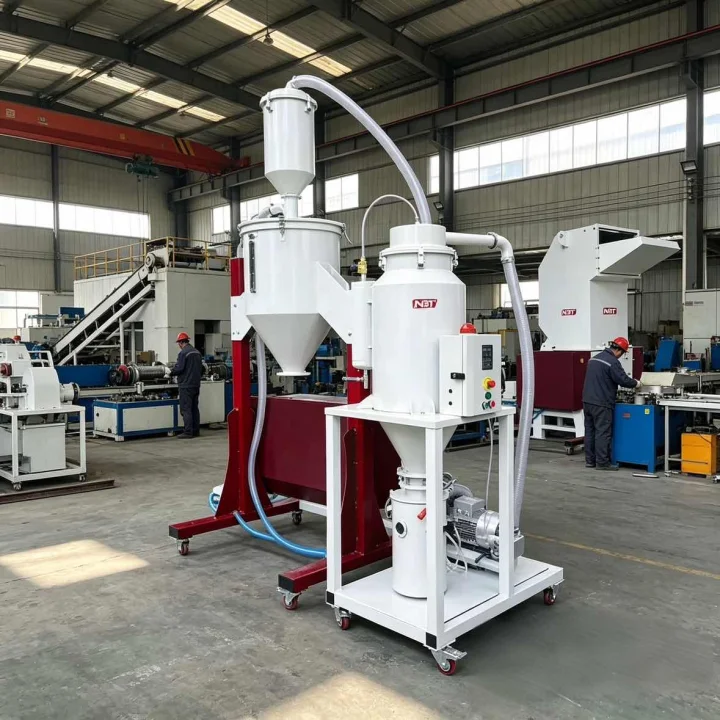
TL;DR
- Pellet uniformity improves feeding accuracy, and even a size variation control within ±0.5 mm can reduce process fluctuation across a 12-hour shift.
- Moisture control below 0.2 % is critical for many polymers because wet material degrades melt stability, so drying and sealed handling matter.
- Throughput stability of 200 kg/h to 1,500 kg/h is easier to maintain when scrap is cut, filtered, and pelletized in one coordinated line.
- Material savings can reach meaningful levels when in-house scrap rates of 3 % to 8 % are recovered instead of discarded.
- Energy and maintenance improve when contamination is reduced, and cleaner feedstock can lower unplanned stoppages by several events per 30 days.
Why pellet quality is the hidden driver of manufacturing performance
Pellets may look simple, but they act as the starting point for the entire downstream process. A pellet with stable shape, controlled size, and predictable melt response feeds more evenly through hoppers, screws, and dosing systems. That is why the Granulating& Recycling Series deserves attention: it does not just recycle waste, it rebuilds raw material into a form that production equipment can handle efficiently.
When manufacturers ignore pellet quality, they often see symptoms instead of causes. They blame heaters, screws, molds, or operators, while the real problem begins much earlier in the line. Irregular recycled feed can create unstable residence time, trapped air, gels, black specks, and inconsistent output. This happens because non-uniform flakes melt at different rates, so the melt stream becomes less predictable. It also happens because dirty scrap carries paper, dust, or metal traces, so filters load faster and pressure rises.
In contrast, a modern recycling and granulating line supports repeatability. It helps transform trim, sprues, rejected parts, and film edge waste into reusable pellets with tighter process windows. For a plant manager, that means fewer line interventions per week. For a production engineer, it means steadier output in kg/h. For a purchasing team, it means lower dependence on virgin material measured in tons per month.
Key idea: The value of the Granulating& Recycling Series is not only waste reduction. Its bigger value is process stability, which affects productivity, defects, energy, and profitability at the same time.
What the Granulating& Recycling Series actually does
A complete system usually combines several functional stages: size reduction, conveying, densifying, melting, filtering, degassing, and pelletizing. Each stage affects pellet quality. If one stage is weak, the final pellet often reflects that weakness.
| Stage | Main function | Impact on pellet quality |
|---|---|---|
| Granulating | Reduces scrap into flakes or regrind of controlled dimensions in mm | Supports more consistent feeding and less bridging in hoppers |
| Densifying | Compacts low-bulk-density waste such as film or fiber | Improves feed continuity and lowers air entrapment |
| Extrusion and melting | Converts regrind into a homogeneous melt at controlled temperature in °C | Improves melt uniformity and reduces unmelted particles |
| Filtration | Removes contamination through screens or melt filters | Protects downstream quality and reduces black specks |
| Pelletizing | Cuts strands or die-face output into pellets of repeatable length in mm | Creates better flowability, dosing, and packaging behavior |
Manufacturers benefit most when they treat the system as one connected process rather than a collection of isolated machines. That matters because every upstream variation reaches the pelletizer, so final pellet consistency depends on total line integration.
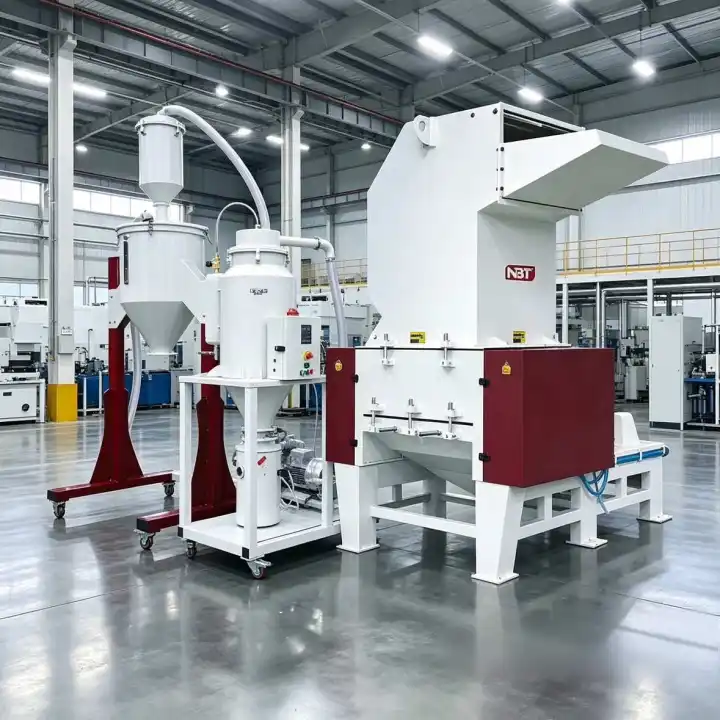
Why manufacturers struggle with recycled pellet consistency
Recycled material is difficult to standardize because scrap itself is variable. The scrap may differ by thickness in mm, age in days, contamination level in %, color lot, or thermal history. A film line, for example, produces very light trim that behaves differently from injection-molded sprues. A rigid packaging plant may generate thicker rejects that require different cutter geometry and melt energy. If a plant feeds all of that material into a basic grinder without proper control, pellet quality quickly becomes inconsistent.
Another challenge is moisture. Some polymers absorb water rapidly, while others pick up surface moisture during storage for 24 hours to 72 hours. Moisture causes defects because it alters polymer behavior during melting, so pellets can show bubbles, haze, brittleness, or poor bonding in later processing. The same logic applies to contamination. Dust and labels remain small enough to escape casual inspection, but they still disrupt the melt.
The best systems therefore combine controlled granulation, pre-conditioning, and melt filtration. This combination gives manufacturers a way to normalize highly variable scrap streams into a more predictable recycled pellet.
The direct connection between pellet quality and machine efficiency
Machine efficiency depends on consistent input. If pellet geometry varies too much, feeding can pulse. If bulk density swings from one batch to the next, screw loading changes. If melt flow changes with every hopper refill, operators chase settings instead of making product. These issues compound over a 10-hour shift or a 30-day production cycle.
A strong Granulating& Recycling Series helps eliminate those swings. It matters because consistent pellets feed more evenly into processing equipment, so output becomes easier to stabilize. It also matters because cleaner melt reduces screen blockage and die buildup, so maintenance intervals can be extended from every 2 days to every 5 days or more in suitable applications.
In practical terms, manufacturers often see improvement in:
- Output consistency in kg/h
- Start-up time in minutes
- Scrap ratio in %
- Energy per kilogram in kWh/kg
- Operator intervention frequency per shift
Where the system creates the biggest financial impact
Cost savings do not come from one single point. They come from multiple smaller gains that build over time. First, manufacturers recover a larger share of in-house scrap. Second, they reduce virgin resin purchases in kg or tons. Third, they lower disposal cost per month. Fourth, they cut defects and rework. Fifth, they improve uptime.
Suppose a plant consumes 1,200 tons of polymer per year and generates an internal scrap rate of 4 %. That equals 48 tons per year. If a recycling and granulating line allows recovery of 85 % of that scrap, the plant reclaims 40.8 tons annually. Even before adding reduced disposal and handling costs, that amount can significantly change material economics.
The value becomes larger when the recovered pellets are stable enough for regular reintroduction into production. Recovery alone is not enough. Usable recovery is what matters. A pile of poor-quality regrind has limited value, while a stream of controlled pellets can be blended back with confidence.
Important design features to evaluate in 2026
As manufacturers plan equipment upgrades in 2026, several features deserve close review. The first is modularity. Plants rarely process one material forever, so systems that can adapt to film, rigid flakes, fibers, or mixed in-house scrap offer better long-term flexibility. The second is temperature control. Sensitive polymers need stable melt conditions in °C to avoid degradation. The third is filtration capability. Fine contamination can ruin pellet quality even when throughput remains high.
Also look for automation, easy cleaning, quick screen changes, and real-time monitoring. These features matter because operators need fast response when material changes, so the line can stay productive without long manual adjustments. In many plants, data visibility is no longer optional. It allows teams to compare motor load in kW, melt pressure in bar, and output in kg/h across jobs and shifts.
Signs of a strong system
- Stable pellet length in mm
- Low fines content in %
- Consistent bulk density in kg/m³
- Reliable degassing under varying loads
- Simple maintenance access in less than 30 minutes
Common warning signs
- Frequent die blockage every 1 day to 2 days
- High pellet dust after conveying
- Visible color streaks in finished parts
- Output drift greater than 10 %
- Excess operator tuning several times per shift
How pellet quality influences downstream packaging and handling
Pellet quality does not stop mattering once the pellets leave the cutter. Uniform pellets also store, convey, dose, and package more reliably. Plants that ship compounded material or use intermediate packaging need pellets that resist dust generation and flow consistently into bags, bins, and automated systems. In some packaging applications, cushioning and product protection are equally important. For example, protective packaging formats such as the https://www.hyunpack.com/air-cushion-box/ or specialized cosmetic packaging items such as https://www.hyunpack.com/28x745mm-air-cushion-puff-case-1-2-product/ demonstrate how material consistency and dimensional control support final packaging reliability.
That connection is useful for manufacturers to remember. When pellets are more consistent, downstream forming and packaging steps become more repeatable. That reduces waste not just in recycling, but through the full product chain.
Operational best practices for better pellet quality
Even the best machine series cannot compensate for poor operating discipline. Manufacturers should build a repeatable routine around material preparation, line settings, and quality checks.
- Separate scrap by polymer family before processing.
- Control moisture with drying and covered storage.
- Inspect contamination at the beginning of every shift.
- Track pellet dimensions in mm and fines in %.
- Document temperature windows in °C for each material.
- Schedule screen and blade maintenance by hours run, not guesswork.
These routines matter because recycling quality depends on preparation as much as machinery, so discipline in daily operation often determines whether recovered pellets are truly reusable.
Conclusion
The Granulating& Recycling Series matters because modern manufacturing depends on stable material behavior, not simply low material cost. Better pellets create smoother feeding, more consistent melting, fewer contaminants, and more reliable downstream results. In other words, pellet quality is operational quality. When a system is designed well and run with discipline, recycled material becomes a controlled resource instead of a variable risk.
For manufacturers evaluating equipment in 2026, the best question is not only how much scrap can be recycled in kg/h. The better question is how consistently that system can turn scrap into high-quality pellets that support production every day, every week, and every year.
FAQ
1. What is the main purpose of a granulating and recycling system?
The main purpose is to convert production scrap into reusable pellets with controlled properties. A good system does more than chop waste into smaller pieces. It creates processable material that can return to extrusion, molding, or compounding lines with predictable behavior. That is important because recovered material only creates value when it can be reused consistently, so pellet quality is the real measure of success.
2. How does pellet size consistency affect product quality?
Pellet size consistency affects how material feeds, melts, and mixes. If pellets are too long, too short, or highly irregular in mm, the feed system may pulse and the screw may experience uneven loading. That leads to output variation, temperature instability, and appearance defects. Uniform pellets help maintain a steady process window over each 8-hour or 12-hour shift.
3. Can recycled pellets perform close to virgin material?
Yes, in many applications they can perform close to virgin material when contamination, moisture, and thermal history are well controlled. Performance depends on the polymer type, the scrap source, and the target product. In-house scrap often offers the best opportunity because its composition is known. The more controlled the input, the more reliable the recycled pellet output becomes.
4. Which materials benefit most from the Granulating& Recycling Series?
Common thermoplastics such as PE, PP, PET, PS, ABS, and selected engineering materials often benefit strongly. Film trim, rigid packaging rejects, sprues, runners, and off-spec parts are all useful sources. The exact setup should match the material form and melting behavior. Thin film, for example, may need densifying, while rigid regrind may need stronger size reduction and filtration.
5. Why is moisture control so important in recycled pellets?
Moisture changes melt behavior and can damage polymer quality. Some polymers hydrolyze when processed wet, while others form bubbles or weak spots. This matters because excess moisture reduces consistency, so even a strong pelletizing line can produce poor pellets if feedstock handling is uncontrolled. Drying, sealed storage, and fast transfer all help keep moisture within target limits such as below 0.2 %.
6. Does automation really improve pellet quality?
Yes. Automation improves repeatability in feeding, temperature control, cutter speed, and alarm handling. Manual operation can work well, but it depends more heavily on operator skill and attention. Automated control matters because process changes happen quickly, so the system can react faster than a purely manual line when scrap characteristics shift during production.
7. How should a manufacturer calculate return on investment?
Start by measuring annual scrap generation in tons, disposal costs per month, virgin material prices per kg, energy use in kWh, labor time in hours, and defect reduction in %. Then compare those values before and after installation over at least 12 months. A realistic ROI model should also include maintenance parts, downtime changes, and the percentage of recycled pellets that can actually be reused in saleable production.
8. What should buyers prioritize when selecting equipment in 2026?
In 2026, buyers should prioritize modular design, data visibility, easy cleaning, efficient filtration, and stable throughput in kg/h. They should also ask how quickly the machine can switch materials and how maintenance affects uptime. The best choice is usually the system that delivers repeatable pellet quality across real production variability, not just high rated capacity under ideal conditions.
Author
This article is published for readers of https://www.cn-nbt.com/ and focuses on the manufacturing importance of the Granulating& Recycling Series.
Post time: Apr-23-2026